Information spread across systems
Maintenance history, defect records, technical documents, parts inventory, engineer rosters and flight schedules can sit in separate platforms.
Aviation Maintenance & Operations · Solution Brief
When an in-flight maintenance event reaches the airline, use the remaining flight time to assemble the information, people and resources needed on the ground. Sovereign SLMs connect aircraft health events with maintenance history, technical documentation, parts availability, engineering resources and flight schedules to prepare evidence-backed recovery options for authorized airline teams.
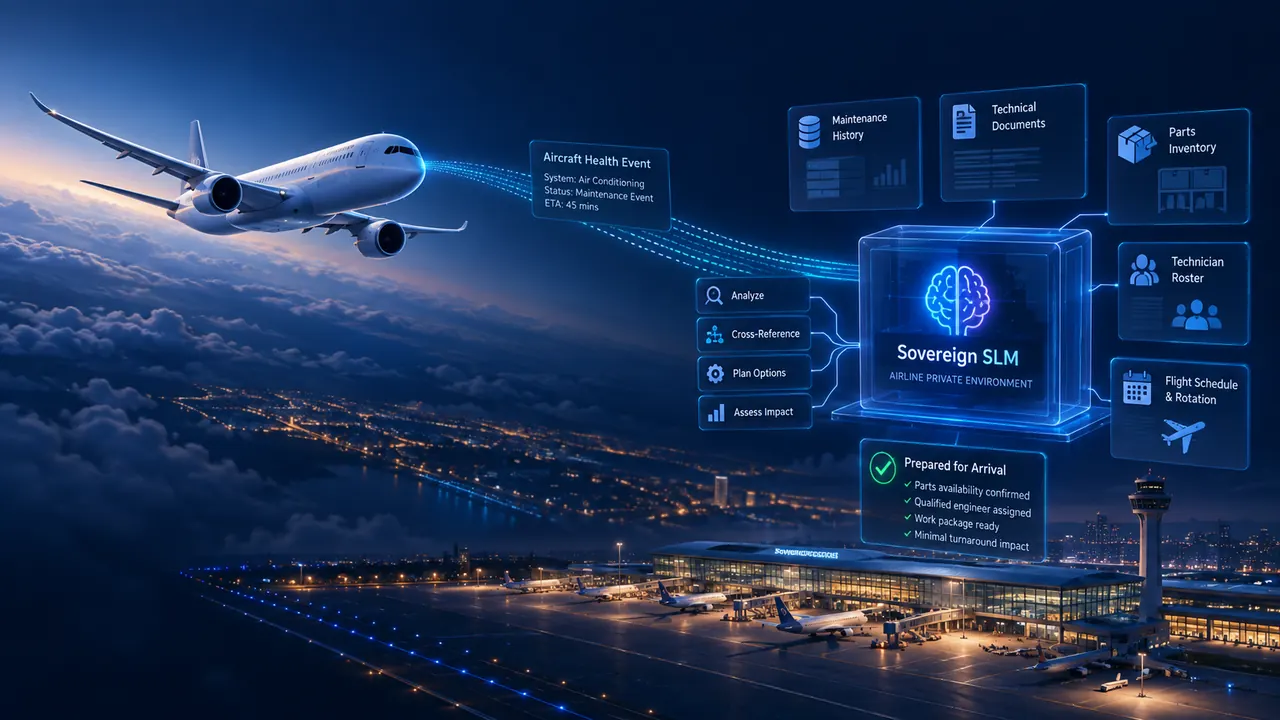
Aircraft recovery intelligence is a ground-based AI orchestration layer that helps maintenance control, engineering and operations teams prepare for an aircraft's arrival when an in-flight technical event requires attention. It does not replace aircraft health monitoring, pilot procedures, airline maintenance systems or authorized engineering decisions. Instead, it brings relevant information together, retrieves approved technical context, checks operational resources and prepares recovery alternatives before the aircraft reaches the gate.
Use flight time as preparation time.
The business challenge
Modern aircraft and airline systems already generate extensive technical information. The delay often comes from bringing the right information, resources and operational context together quickly enough to act when the aircraft arrives.
Maintenance history, defect records, technical documents, parts inventory, engineer rosters and flight schedules can sit in separate platforms.
A maintenance event may arrive while the aircraft is still airborne, leaving a finite window to prepare the ground response.
The required part, tool, skill or maintenance capability may be available at one station but not another.
Repairing now, moving a part, using an approved dispatch provision, changing the maintenance location or swapping an aircraft can have different downstream operational impacts.
Relevant evidence may exist across maintenance procedures, airline SOPs, engineering notes, historical work orders and approved dispatch documentation.
Recovery preparation can be accelerated with AI, but flight-safety, dispatch and maintenance-release decisions must remain with authorized personnel under established airline procedures.
The solution
Select a stage to show how the Sovereign SLM acts as an orchestration layer around existing airline systems.
Stage 01
A relevant aircraft-health or maintenance event is transmitted to the airline's ground environment through existing aircraft and airline systems.
Stage 02
The airline's approved workflow or Maintenance Control process enables recovery planning for the event.
GROUND_RECOVERY_PLANNING = ENABLED rather than asking the SLM to classify flight safety.Stage 03
Retrieve relevant maintenance history, prior defects, technical references, parts availability, engineer authorizations, tools, station capability and the aircraft's upcoming rotation.
Stage 04
Compare possible preparation paths such as immediate inspection, parts movement, alternate maintenance location, authorized dispatch review or an aircraft swap.
Stage 05
Notify the relevant team, identify tools, reserve or locate parts where allowed, prepare a draft work package and surface the technical references required for review.
Stage 06
Authorized maintenance, engineering and operations personnel review the evidence and approve, modify or reject the preparation plan. Physical inspection and maintenance are completed under established airline procedures after arrival.
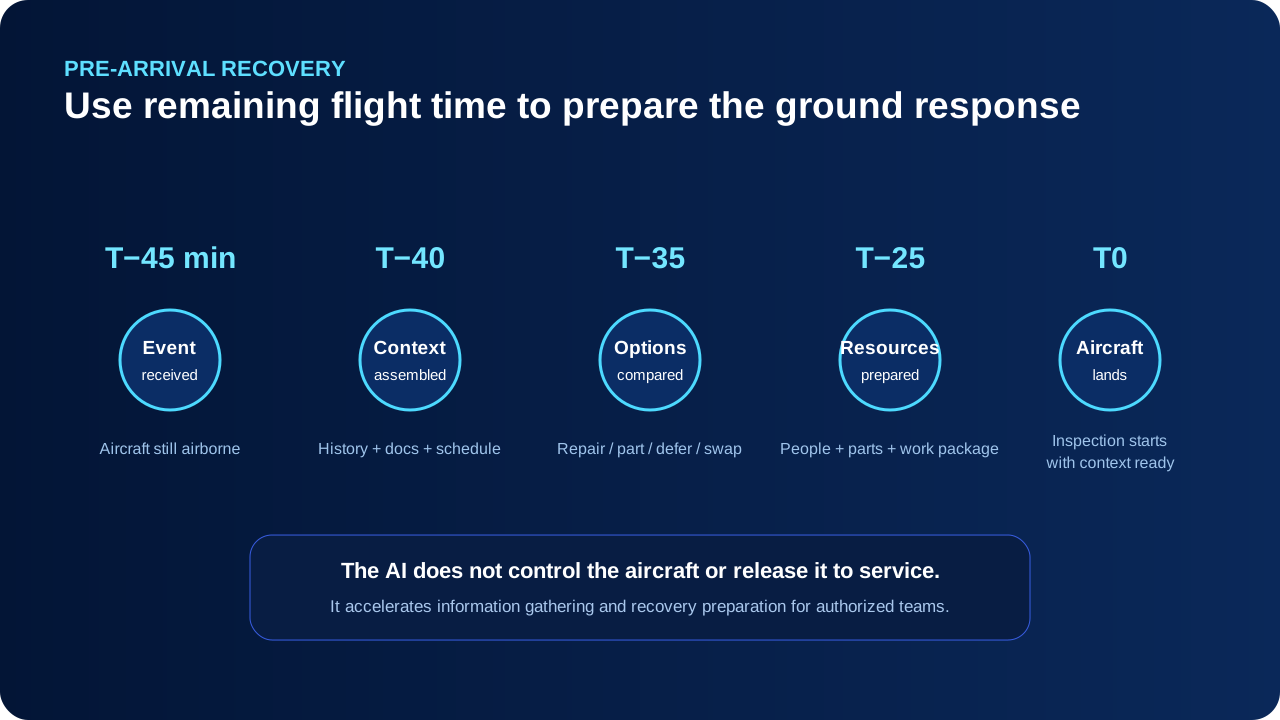
The SLM prepares ground recovery options. Flight crew and authorized airline personnel retain all flight-safety, dispatch and maintenance-release authority.
Core capabilities
Receive maintenance events and context from existing airline or OEM health-monitoring systems without adding an SLM to the aircraft.
Find prior defects, repeat events, completed work orders and earlier technician observations for the aircraft or fleet.
Search approved maintenance procedures, airline SOPs, engineering notes, dispatch documentation and other authorized technical content with version and aircraft-type controls.
Check serviceable inventory by station, identify nearby stock and surface logistics options for authorized review.
Match aircraft type, task requirements, authorization, shift and location against available maintenance personnel and station resources.
Understand arrival time, next sector, planned ground window, aircraft rotation and potential downstream disruption.
Bring technical, material and operational evidence together to compare preparation paths instead of presenting disconnected search results.
Record what the model retrieved, which tools it called, what evidence it used, what it recommended and who approved or rejected the action.
Designed around your existing systems
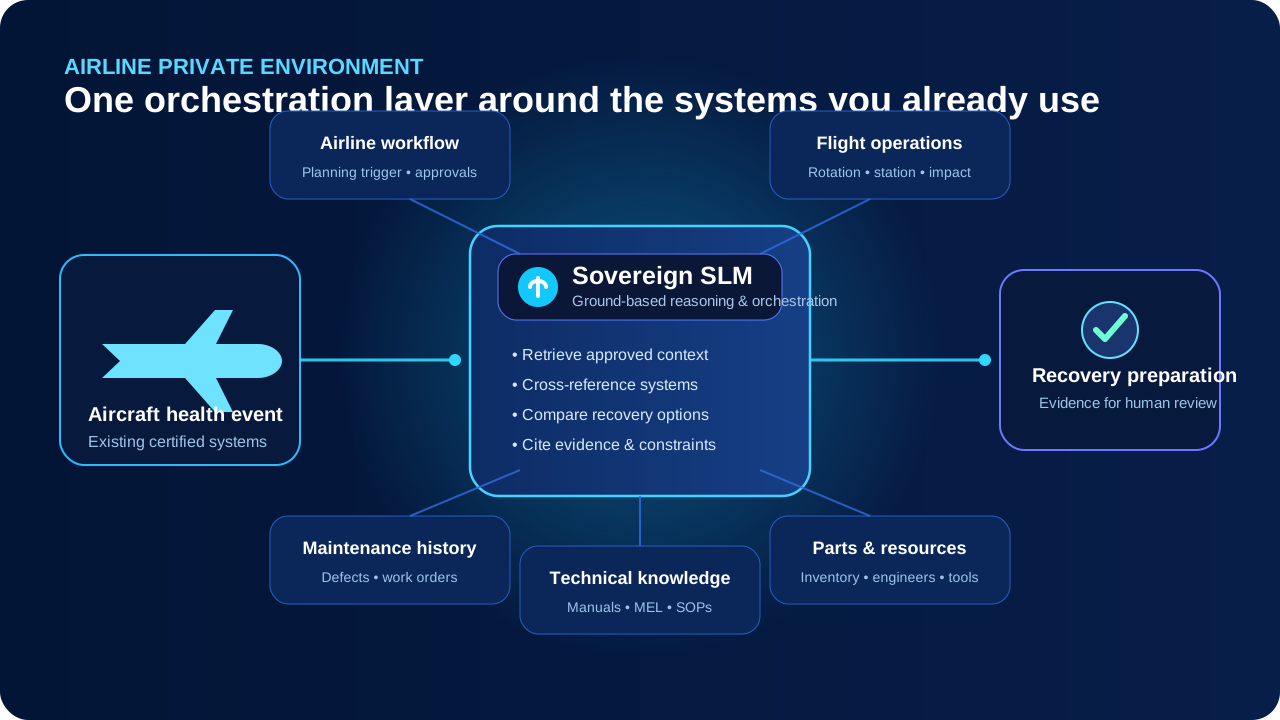
Aircraft health platforms, maintenance information systems, ERP and inventory applications, crew or engineering rosters, OCC tools, document repositories and airline data platforms can continue performing their existing roles. The Sovereign SLM sits above them as a private reasoning and orchestration layer.
Typical systems to connect: - Aircraft health / OEM health-monitoring platforms - MRO / maintenance information systems - Defect and work-order history - ERP and parts inventory - Technical document repositories - Engineering authorization and roster systems - Flight schedules and aircraft rotations - OCC / disruption-management platforms - Airport or station capability data - Logistics and material-movement services
Integration guidance: Prefer secure APIs and event streams where available. Use MCP or an equivalent controlled tool layer for model access. Legacy systems can be connected through middleware, secure file transfer, read replicas or controlled database procedures where required.
Security and governance
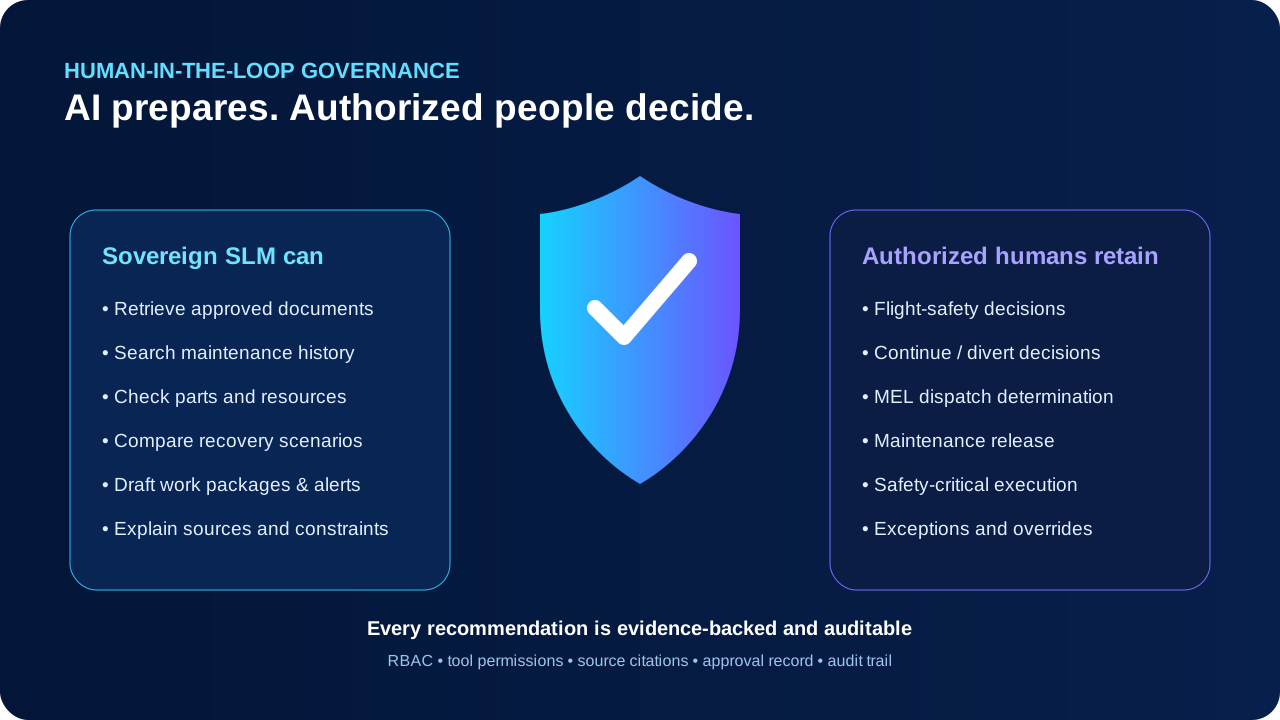
The model can accelerate information gathering and preparation, but airline authority remains explicit.
Run the SLM inside the airline's private data centre, private cloud or controlled VPC. No onboard SLM is required for this use case.
Limit users and tools by function, station, aircraft, document classification and operational responsibility.
Separate read actions from write actions. For example, checking inventory can be automatic while reserving a scarce component can require approval.
Require the model to cite retrieved documents, structured-system records and tool results for every recovery recommendation.
Keep continue/divert decisions, MEL dispatch determination, maintenance release and safety-critical execution outside the SLM's authority.
Capture model input, retrieved evidence, tool calls, recommendations, approvals, exceptions and final outcomes.
Where the Sovereign SLM adds value
Keep core flight-safety and operational rules deterministic. Use the SLM where language understanding, contextual retrieval and cross-system reasoning reduce manual effort.
Turn a maintenance event into a structured summary of relevant history, documentation, material and operational context.
Find similar prior defects and completed work orders, while clearly separating precedent from current approved procedure.
Retrieve the current, applicable technical references based on aircraft type, event, ATA chapter, version and operator context.
Build evidence-backed options such as inspection on arrival, parts movement, alternate maintenance location, approved dispatch review or aircraft swap.
Explain why an option is constrained by material, people, station capability or the aircraft's next rotation.
Generate a concise, traceable package for Maintenance Control, engineering, station maintenance and Operations Control.
The SLM recommends and prepares. Authorized airline personnel remain responsible for safety, dispatch, maintenance and release decisions.
Industry context
IATA identifies parts shortages, constrained maintenance capacity and longer repair turnaround times as pressures on airline operations. Its June 2026 priorities include better integration, digitalization and AI for maintenance and material decision support.
Airbus describes in-flight health monitoring as enabling ground teams to review documentation and prepare work orders, parts, procedures and manpower before landing.
Business outcomes
Move information retrieval, parts checks and resource coordination into the period before arrival where the airline has reliable event data and a ground-planning trigger.
Give Maintenance Control, engineering, station maintenance and Operations Control a common evidence set.
Bring structured airline data and approved technical knowledge into one workflow instead of requiring separate searches.
Identify people, parts, tools and station capability before the aircraft reaches the gate.
Compare alternatives using the same approved rules, data sources and evidence standards.
Preserve the reasoning context, source evidence, tool calls, approvals and final outcome for each recovery case.
Recovery case record
Maintain one searchable case from the first in-flight event through post-arrival closure.
Illustrative use case
An A350-class aircraft is operating a Dubai-to-Frankfurt sector. Approximately 45 minutes before arrival, a maintenance event is received by the airline's ground systems. The flight crew and existing airline procedures remain responsible for all in-flight decisions.
Once ground recovery planning is enabled, the Sovereign SLM retrieves the aircraft's recent maintenance history, finds the applicable technical references, checks Frankfurt material and engineering capability, looks for nearby parts if required and reads the aircraft's next planned rotation. It then prepares comparable recovery options for Maintenance Control and station engineering.
By the time the aircraft lands, the relevant people have the evidence, likely resource requirements and contingency options needed to begin the approved ground process immediately.
Important: This scenario is illustrative. It is not a claim about an actual airline incident, technical defect or maintenance action.
Pilot approach
Prove the workflow, safety boundaries, data quality and integration pattern before expanding across fleet types and stations.
Choose one non-emergency maintenance-event class with clear ground recovery procedures and measurable coordination effort.
Document event sources, systems, documents, roles, approval gates, station capabilities and current recovery steps.
Integrate a small set of priority systems: aircraft-event feed, maintenance history, technical knowledge, parts inventory, engineer roster and flight rotation.
Implement the private SLM, retrieval layer, controlled tool gateway, recovery workspace and audit trail.
Test retrieval quality, wrong-version protection, permissions, failure modes, human approval and behavior when information is missing or conflicting.
Track event-to-prepared-plan time, manual searches avoided, recommendation acceptance, data-quality exceptions, integration reliability and post-arrival readiness.
Expand to additional event classes, fleets, stations, MRO partners and operational systems.
Why Sovereign SLM Labs
Keep the model in the airline environment while existing aircraft systems continue handling aircraft-side monitoring and communications.
Start with the actual maintenance-control workflow, roles, documents, rules, integrations and approval boundaries.
Connect structured airline systems and unstructured technical knowledge through controlled tools rather than duplicating systems of record.
Build human decisions, RBAC, tool permissions, evidence requirements and audit records into the workflow.
Use task-specific aviation retrieval, prompts, evaluations and workflows instead of relying on a generic public chatbot.
Begin with one event type and station pattern, then extend across fleets, stations and operational processes.
Frequently asked questions
No. For this use case, the SLM runs in the airline's ground environment. Existing aircraft and airline systems transmit the relevant event or maintenance information to the ground.
No. In-flight safety and operational decisions remain with the flight crew and established airline procedures. The AI assists with ground recovery preparation.
No. It may retrieve the relevant approved information and prepare it for review, but final dispatch and maintenance determinations remain with authorized airline personnel.
No. The solution is designed as an orchestration layer around existing aircraft-health, maintenance, inventory, engineering, document and operations systems.
Potentially, yes. The integration pattern is system-agnostic, but each fleet, airline document set and platform must be connected and validated under the operator's governance model.
The system should surface the gap, avoid unsupported recommendations and route the case to an authorized user. Missing evidence is treated as a control condition, not an invitation for the model to guess.
Only within explicitly approved permissions. Low-risk read actions may be automatic. Write actions such as reservations, notifications or work-order creation can be placed behind configurable approval gates.
Start with one representative non-emergency event class, a small number of ground systems, a defined approval workflow and agreed success measures.
The next practical step
Select a recurring maintenance event or recovery scenario. Map what information teams search for today, which systems they open, who makes each decision, what can be prepared before arrival and what must remain under human authority. Then prove the workflow with the airline's own data and controls.