Sovereign AI · Enterprise insights
Sovereign AI: Who Really Controls the Intelligence Your Business Depends On?
What Sovereign AI means, how it evolved, where it makes business sense, and why Small Language Models could make it accessible to everyone, from governments and enterprises to families and individuals.
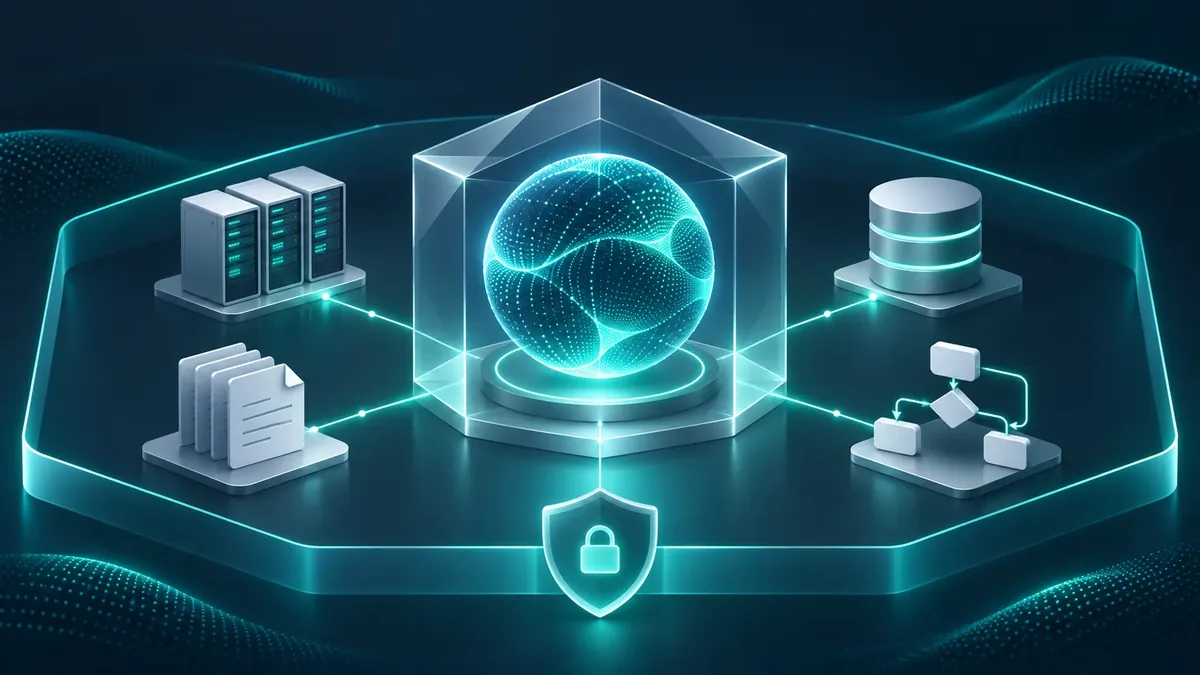
A company can spend millions protecting its data, keeping sensitive information behind firewalls, restricting employee access, and meeting strict security requirements.
Then an employee opens an AI application, uploads an internal document, and asks it to prepare a summary.
Where does that document go? Who processes it? Is any part of it retained? And what happens if the AI provider changes its policies, raises its prices, or discontinues the service?
These are questions that more business leaders are beginning to ask. Not because they are against AI, but because they want to understand what they are giving up in exchange for its convenience.
This is where Sovereign AI comes into the picture.
The idea is straightforward. Organizations should have meaningful control over the AI systems they depend on, including the information those systems process, the infrastructure they run on, and the decisions they are allowed to make.
What makes the subject interesting is how widely that idea applies. Sovereign AI is not just for governments building national computing infrastructure. It could be just as relevant to a bank protecting its financial records, a manufacturer safeguarding product designs, an HR department managing employee information, or an individual who wants a private AI assistant.
Let's explore what sovereignty really means in the context of AI, where it matters, and how organizations can achieve it without making AI unnecessarily complicated or expensive.
1. What Is Sovereign AI?
Sovereign AI refers to the ability of a country, organization, or individual to exercise meaningful control over how its AI systems are developed, deployed, operated, and governed.
There is no single, universally accepted definition. Governments tend to think about sovereignty in terms of national capabilities and strategic independence. Enterprises are usually more concerned with confidentiality, operational control, compliance, and dependence on technology providers.
Both perspectives share a common principle: the party relying on the AI should have an appropriate level of authority over how it operates.
For a business, this raises several practical questions.
Who can access the information the AI processes? Where does that processing happen? Who can update or replace the model? Can an external provider access the system? Could the organization continue using its AI if its current vendor became unavailable?
These questions reveal why sovereignty involves much more than data storage.
The different dimensions of AI sovereignty
A useful way to understand Sovereign AI is to look at the controls that make it possible.
| Dimension | What it means in practice |
|---|---|
| Data sovereignty | Controlling how information is stored, processed, accessed, shared, and retained |
| Model sovereignty | Having appropriate rights and control over model selection, deployment, customization, and replacement |
| Infrastructure sovereignty | Determining where AI runs and who controls its computing environment |
| Operational sovereignty | Controlling administrative access, monitoring, updates, and day-to-day operations |
| Governance sovereignty | Defining the policies, approvals, and oversight under which AI operates |
| Strategic sovereignty | Maintaining the ability to adapt, migrate, or continue operating without unacceptable supplier dependence |
An organization does not necessarily need complete ownership of every technology component to establish meaningful sovereignty.
For example, an enterprise may choose to use third-party infrastructure while retaining strict control over its data, encryption keys, model execution, and administrative access.
The important thing is that those controls are clearly defined and can be verified.
Is Sovereign AI the same as Private AI?
Not quite.
Private AI generally focuses on keeping enterprise data and AI processing confidential and accessible only to authorized users.
Sovereign AI goes further. It also considers jurisdiction, operational independence, infrastructure control, governance, and long-term technology dependencies.
Similarly, a sovereign cloud can provide a foundation for Sovereign AI, but it does not automatically make every AI application running on it sovereign.
Consider a company that stores its documents on a private server but uses an external language model to answer questions about those documents.
If the application sends retrieved information to that model, the company still depends on an external processing environment.
The documents may never leave the private repository as complete files, but portions of their contents can still cross the organization's intended security boundary.
That distinction matters.
Sovereignty is not simply about where your data lives. It is about what happens to your data when AI starts using it.
2. How Did Sovereign AI Evolve?
Although the term Sovereign AI has gained popularity in recent years, the concerns behind it are not new.
For decades, governments have debated technological independence, national security, control over critical infrastructure, and reliance on foreign suppliers.
Businesses have faced similar questions as they moved sensitive workloads from their own data centers into cloud environments.
What changed with generative AI was the nature of the dependency.
Previously, organizations primarily worried about where their data was stored and who could access it. Now they must also consider where models execute, how prompts are processed, where embeddings are generated, and who controls the systems making AI-enabled decisions.
From data sovereignty to AI sovereignty
Several developments helped shape today's conversation.
2018: Data jurisdiction becomes harder to ignore
The United States enacted the CLOUD Act, which clarified certain legal obligations concerning data under the control of service providers subject to US jurisdiction.
This reinforced an important distinction for international organizations: storing information in a particular country does not necessarily eliminate the legal obligations that may apply to its provider.
2019–2022: Sovereign cloud and national computing capabilities gain attention
European initiatives such as Gaia-X brought greater attention to cloud interoperability and digital sovereignty.
The discussion gradually expanded to computing infrastructure. Governments began asking whether they had sufficient access to processors, data centers, technical talent, and other resources needed to develop AI capabilities.
2023–2024: Generative AI changes the conversation
As generative AI adoption accelerated, dependence on externally operated models became a more immediate concern.
In February 2024, NVIDIA CEO Jensen Huang publicly called for countries to develop their own AI infrastructure and capabilities.
His comments helped bring Sovereign AI into mainstream technology discussions, although the underlying ideas had existed for years.
2025 onward: Sovereignty becomes an architectural decision
Governments and enterprise technology providers increasingly began treating sovereignty as a practical issue involving deployment options, operational controls, model portability, and infrastructure resilience.
The UK's discussion of national AI sovereignty, for example, has emphasized the ability to access, influence, or control critical AI capabilities rather than requiring complete technological self-sufficiency.
The direction of this evolution is significant.
Sovereign AI began largely as a national strategic concern. It is now becoming an architectural consideration for individual organizations and their business functions.
3. Why Does Sovereign AI Matter? The Main Benefits
There is no single reason why every organization should adopt Sovereign AI.
For some, protecting confidential information is the priority. For others, it is regulatory compliance, operational continuity, or simply the ability to choose technology providers without becoming permanently dependent on them.
Here are the benefits that tend to matter most.
Protecting confidential information and intellectual property
Think about the information an enterprise accumulates over the years.
Customer records, pricing strategies, product designs, financial models, engineering documentation, contracts, internal research, and operational procedures can represent a substantial part of its competitive advantage.
AI makes this knowledge easier to search, analyze, and use. It can also create new opportunities for sensitive information to reach systems outside the organization's control.
A properly designed sovereign architecture can limit that exposure by keeping restricted processing inside approved environments.
Greater confidence in governance and compliance
Organizations in regulated industries must often demonstrate who accessed particular information, which systems processed it, and what controls were in place.
Sovereign AI can make it easier to build these requirements into the architecture from the beginning.
For example, a compliance assistant could operate with restricted document access, keep records of its findings, and require a human reviewer to approve important conclusions.
This does not automatically make the system compliant with every applicable regulation. It does, however, give the organization more direct control over the safeguards and evidence needed to support compliance.
Less dependence on a single AI provider
One concern with relying entirely on externally hosted AI services is that the customer has limited control over changes to the service.
Prices may change. Models may be replaced. Features may be discontinued. Availability may differ across regions.
Organizations that can deploy and operate approved models independently have more options.
They can evaluate alternative models, change infrastructure providers, or maintain selected workloads without depending on a single external API.
Of course, that flexibility depends on having suitable model licenses, deployment capabilities, and portable architecture. It does not happen automatically.
Resilience when connectivity is limited
Not every AI system operates in a modern office with reliable internet connectivity.
Factories, industrial facilities, remote locations, and certain government environments may have limited or restricted access to external services.
A locally deployed AI system can support selected operations even when outside connectivity is unavailable.
For an industrial operator, this could mean continuing to search maintenance documentation or retrieve approved technical procedures during a network outage.
Better economics for the right workloads
Sovereign AI is often associated with expensive infrastructure, but that is only part of the picture.
An organization processing a high volume of relatively simple requests may find that a smaller, specialized model running on controlled infrastructure offers a more predictable cost structure.
For other workloads, a managed cloud model may still be more economical.
The benefit comes from choosing an architecture that fits the work instead of assuming that every request needs the most powerful model available.
4. What Are the Limitations of Sovereign AI?
The benefits are compelling, but sovereignty comes with responsibilities.
Running AI under your own control means taking ownership of decisions that a cloud provider would otherwise manage.
Infrastructure needs to be maintained. Models need to be evaluated. Security vulnerabilities need attention. Users need support. Systems must remain available as demand increases.
There are also some unavoidable trade-offs.
Cost is one of them. Dedicated servers, GPU infrastructure, private networking, monitoring tools, and specialist personnel can make a sovereign deployment expensive, especially when usage is low or unpredictable.
Access to advanced models is another. Some of the most capable models are available primarily through externally operated services. Organizations with strict deployment requirements may have fewer options or need to accept differences in capability.
Scaling requires planning. A model that works well for 20 employees may perform poorly when 2,000 employees begin using it simultaneously. Capacity, concurrency, fault tolerance, and recovery all need to be considered.
Security is still the organization's responsibility. Installing an AI model behind a firewall does not protect it from every cyber threat. Poor access controls, outdated software, vulnerable dependencies, and insecure integrations can undermine the entire system.
Finally, complete independence is rarely realistic. Even an on-premises AI platform may depend on externally developed models, software libraries, processors, and hardware support.
That is why the goal should not be complete isolation at any cost.
The better question is: Which dependencies create unacceptable risk, and which ones can we manage responsibly?
5. Where Should Sovereign AI Be Used?
The strongest use cases tend to share one characteristic: the information being processed, or the operation being supported, is too sensitive or important to place outside clearly defined controls.
Consider a few examples.
| Industry | Where Sovereign AI can add value |
|---|---|
| Banking and financial services | Internal compliance reviews, financial risk analysis, confidential research, regulatory document intelligence |
| Government and defense | Restricted knowledge systems, document research, policy analysis, approved operational assistance |
| Healthcare | Sensitive clinical documentation, research knowledge systems, patient-data workflows |
| Aviation | Maintenance knowledge, technical manuals, operational procedures, safety documentation |
| Manufacturing and FMCG | Proprietary product information, quality processes, engineering knowledge, supply-chain intelligence |
| Telecommunications | Regulatory assessment, internal network knowledge, incident documentation, operations support |
| Legal and professional services | Confidential contracts, due diligence, legal research, privileged document analysis |
| Energy and utilities | Technical documentation, maintenance procedures, operational knowledge, restricted infrastructure information |
An example from financial services
Imagine a financial institution reviewing thousands of internal policies, audit records, regulatory requirements, and customer-related documents.
Employees could benefit from an AI assistant that identifies relevant policies, locates supporting evidence, and prepares draft observations for human review.
But the institution might reasonably prefer not to send that information to an external AI service.
A privately deployed model, connected to approved internal knowledge sources, could provide a useful alternative.
The same principle can apply to a healthcare provider reviewing sensitive medical records or an aviation company working with confidential maintenance documentation.
In each case, the decision depends on data sensitivity, applicable rules, the consequences of failure, and the organization's tolerance for external dependencies.
6. When Should You Avoid Sovereign AI?
Not every AI application deserves a dedicated sovereign environment.
If your marketing team wants to brainstorm public campaign ideas, an approved enterprise AI service may be perfectly adequate.
A chatbot answering questions about publicly available product information probably does not need its own private GPU infrastructure.
And a small business experimenting with AI for the first time may be better served by a managed platform rather than taking on the complexity of running models independently.
There are a few mistakes worth avoiding.
Don't confuse local hosting with security. A poorly protected on-premises system can be less secure than a properly configured managed cloud service.
Don't buy infrastructure before understanding the workload. Start with the information being processed, the expected usage, the performance requirements, and the business risks.
Don't use one large model for everything. Routine document classification or information extraction may be handled effectively by a smaller model.
Don't overlook hidden external connections. A local application may still rely on cloud-based embedding services, telemetry, monitoring, authentication, or model endpoints.
Don't lock yourself into a platform simply because it carries a sovereign label. Check whether models, data, and application components can actually be moved or replaced.
For many organizations, the most sensible answer is a hybrid approach: managed enterprise AI for low-risk tasks, stronger controls for sensitive business information, and isolated infrastructure only where it is genuinely required.
7. Sovereignty at Different Levels: From Nations to Individuals

When people hear the term Sovereign AI, they often think of countries building national data centers or developing their own language models.
That is one form of sovereignty, but it is not the only one.
A useful way to approach the subject is to ask: Who needs to control the AI, and what exactly must remain within their control?
The answer can be very different for a government, a corporation, a department, a family, or an individual.
At Sovereign SLM Labs, we view this through six practical levels of AI sovereignty. This is our practical framing, not an official standard; the examples are illustrative.
Level 1: Geographic Sovereignty
Countries, states, provinces, and cities
At the geographic level, AI infrastructure and its operations are governed by defined territorial, jurisdictional, and policy requirements.
A country might develop domestic AI capabilities to reduce strategic dependence on foreign infrastructure, support local languages, and protect sensitive national information.
For instance, India's investment in national AI computing capacity reflects an interest in developing domestic capabilities while supporting broader AI adoption.
Geographic control can also be relevant at smaller administrative levels.
A state government might require certain citizen records to be processed within approved regional infrastructure. A city authority might establish strict controls over AI systems used for municipal services, infrastructure management, or public administration.
These arrangements do not mean a city or state has the same legal sovereignty as a nation. Rather, they illustrate how geographic requirements can create specific boundaries for AI deployment.
Level 2: Organizational Sovereignty
Government agencies, ministries, defense organizations, and institutions
Two organizations operating within the same country may have very different security requirements.
Consider the US Department of Defense and a civilian government department. Both operate under US law, but the types of information they manage and their permitted technology environments can differ substantially.
A defense organization may need AI systems operating within specially authorized or disconnected environments.
A Ministry of Finance might need a controlled platform for budget analysis, internal documentation, or policy research.
A regulator may require an AI knowledge system that separates confidential supervisory information from other government data.
Here, the important boundary is organizational authority, not simply geography.
Even if the infrastructure is located in the same country, the organization must be able to enforce its own access restrictions, approvals, and operational policies.
Level 3: Enterprise Sovereignty
AI within a company's own security and operational boundaries
This is where Sovereign AI becomes particularly relevant to businesses.
Consider a multinational company with years of information stored in SharePoint, ERP systems, databases, document repositories, and internal applications.
Employees want to use AI to make that information more accessible. The organization wants the productivity benefits but is understandably cautious about sending proprietary knowledge to external systems.
Enterprise Sovereign AI offers a way to design that capability within approved corporate boundaries.
Depending on the requirements, the models and supporting services could run inside the company's data center, in a private cloud, or in an appropriately controlled Virtual Private Cloud (VPC).
The company can establish rules governing data access, model behavior, user authentication, monitoring, and information retention.
It is worth emphasizing that being behind a corporate firewall is not enough on its own. The enterprise also needs to understand the external dependencies of its entire AI application.
Level 4: Departmental Sovereignty
Compliance, Finance, Sales, HR, Operations, and other functions
This is an area that deserves more attention.
An enterprise may have a common AI platform, but that does not mean every department should have access to the same information.
The Finance team works with budgets, forecasts, and confidential financial records.
HR manages employee information, compensation records, and sensitive personnel documents.
Compliance works with regulatory requirements, audit findings, risk assessments, and internal controls.
Sales handles customer relationships, pricing discussions, proposals, and commercial plans.
Operations relies on internal processes, ERP data, procedures, and business performance information.
These teams all have reasons to use AI. They also have reasons to keep some of their information separate.
A well-designed enterprise platform can support departmental sovereignty through access controls, approved data connections, separate knowledge repositories, and, where necessary, isolated model services.
For example, an employee using a Sales assistant should not automatically gain access to confidential HR records simply because both assistants rely on the same underlying model technology.
The advantage is that the company can share common infrastructure without removing the boundaries that different departments need.
Level 5: Family Sovereignty
Private AI for a household
Now consider a smaller setting: a family.
Families increasingly store important information digitally. School records, personal documents, household schedules, financial information, photographs, and other personal records may be spread across devices and cloud services.
A family could choose to operate a private AI assistant that helps organize and search approved household information.
It might help parents find a document, summarize a school notice, or manage shared tasks.
Different family members could have separate access permissions, allowing shared functions without exposing everyone's private information.
For households that value privacy, selected capabilities could run on local computers or home servers rather than depending entirely on external AI services.
This is not national sovereignty in a legal sense. It is a practical form of control over household information and digital tools.
Level 6: Individual Sovereignty
AI that belongs to the person using it
Finally, sovereignty can extend to the individual.
Imagine having a personal AI assistant that runs on your own device, stores selected information locally, remembers only what you authorize, and connects to external services only with your permission.
You decide what it can read, which applications it can access, what information it retains, and when it may share anything outside your device.
With suitable local models and software, parts of this vision are already technically possible.
Of course, a local assistant can still have security vulnerabilities, and access to personal applications must be carefully managed.
But the principle is meaningful: individuals should have more choice over the AI systems that handle their personal information.
Can these levels coexist?
Absolutely. In fact, they often need to.
A bank's Compliance department could use its own restricted AI assistant inside an enterprise-controlled platform, running in a designated country and subject to local regulatory requirements.
That one application would operate under several layers of sovereignty simultaneously.
This is why sovereignty should not be viewed as a simple yes-or-no label.
It is better understood as a set of overlapping boundaries, each serving a different purpose.
8. What Role Do Small Language Models Play in Sovereign AI?
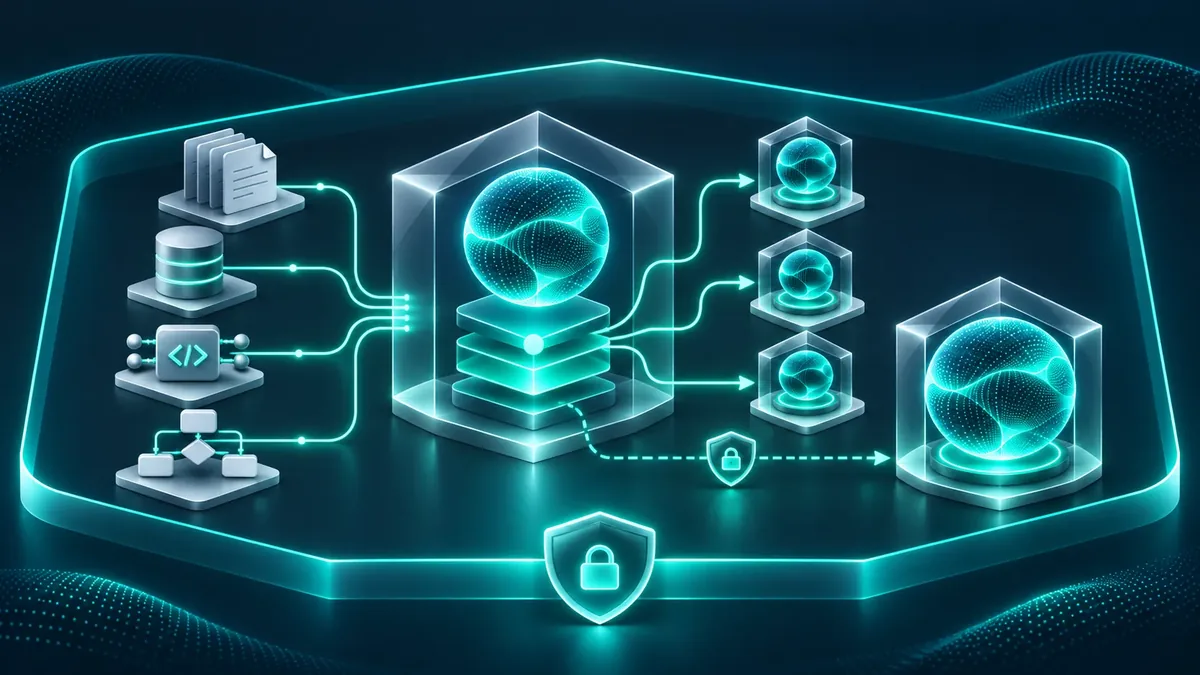
One reason Sovereign AI has traditionally seemed difficult is the infrastructure needed to run powerful language models.
Large models can require significant memory, computing capacity, and operational expertise, particularly when organizations want to run them privately.
This is where Small Language Models (SLMs) become interesting.
An SLM is a more compact language model that can often handle selected tasks with substantially fewer computing resources than a much larger model.
That does not necessarily make it more intelligent or more secure. It does, however, make certain deployment options more practical.
Not every business problem needs a massive language model
Imagine an insurance company that needs to extract policy numbers, identify document types, retrieve approved policy clauses, and draft routine summaries.
A large general-purpose model may be capable of performing these tasks. But it may not be the most efficient choice, particularly when the company processes thousands of similar documents every day.
A smaller model, evaluated and adapted for the task, might deliver the required accuracy at lower infrastructure cost.
Another example is a manufacturing facility where employees need to ask questions about equipment manuals.
A local SLM connected to a carefully managed knowledge repository may be sufficient to retrieve relevant procedures and explain them in straightforward language.
The key is to establish the required accuracy and then test whether the smaller model meets it.
Why SLMs fit sovereign environments
Their relatively modest resource requirements can make SLMs easier to deploy on private servers, controlled cloud environments, and certain edge devices.
They can also be useful for organizations that want to maintain separate AI capabilities for different functions.
Instead of depending entirely on one large centralized model, an enterprise might use a specialized model for Compliance, another for document processing, and a different model for operational support.
This can help distribute workloads and tailor evaluation to each business function.
SLMs and Retrieval-Augmented Generation
An important technology in enterprise AI is Retrieval-Augmented Generation, commonly called RAG.
Rather than expecting a language model to know everything about the business, a RAG system searches approved information sources and provides relevant context to the model when answering a question.
Suppose an employee asks, "What does our internal policy say about retaining customer records?"
The system retrieves the relevant policy material, passes authorized context to the model, and generates an answer based on that information.
It can also provide links or references so the employee can verify the response.
For Sovereign AI, the location and control of every part of this process matter.
Keeping the documents on-premises is not sufficient if the application sends their contents to an unapproved embedding service or external model.
The document store, retrieval process, embedding generation, model inference, logs, and supporting components must respect the defined sovereignty boundary.
SLM-first does not mean SLM-only
There will always be tasks where a larger model performs better.
Complex reasoning, advanced technical work, and unfamiliar problems may require capabilities beyond those of a small specialized model.
A practical approach is to use an SLM where it performs well and route more demanding tasks to another approved model.
The routing decision can consider task complexity, sensitivity, latency, and cost.
If a request involves restricted information, it should never be redirected to an unapproved external model simply because that model produces a better answer.
This makes model orchestration an important part of Sovereign AI.
The real opportunity is not to choose between SLMs and LLMs. It is to use the right model for the right task, within the right boundaries.
9. How Sovereign SLM Labs Helps Build Sovereign AI With Scalability
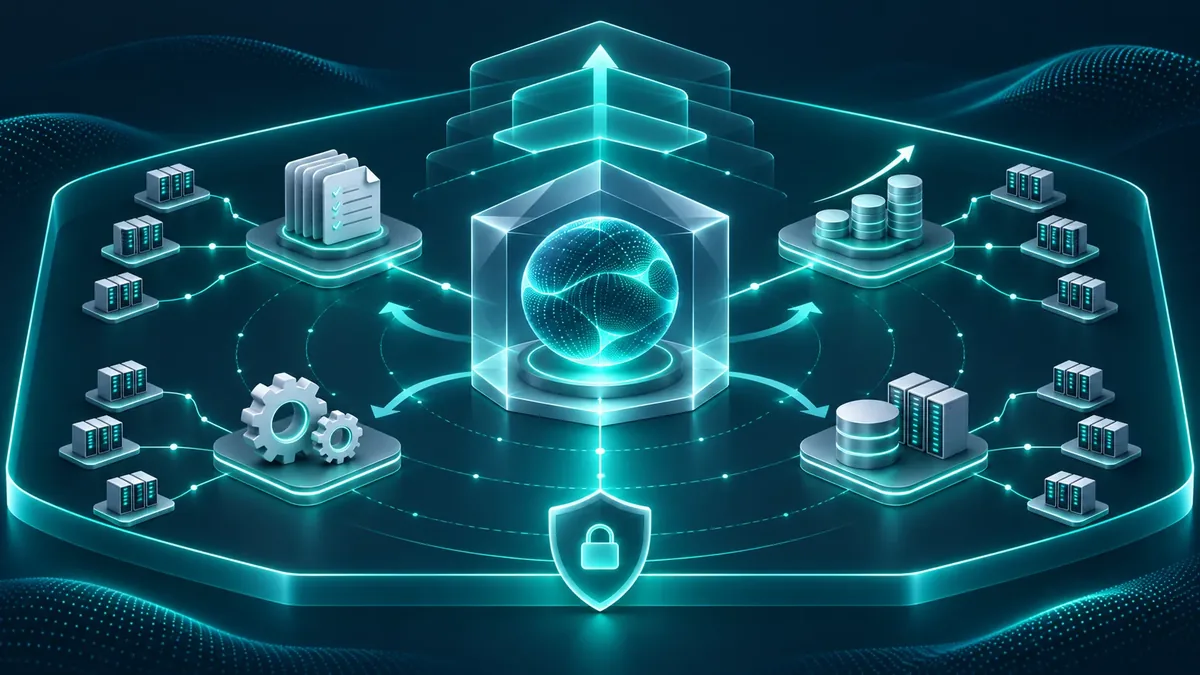
For businesses interested in Sovereign AI, the immediate challenge is often practical.
They may already have data repositories, cloud systems, security controls, and employees using different AI tools.
They do not necessarily want to replace everything.
They want to understand where greater control is needed, how to introduce it without disrupting existing operations, and whether the resulting solution will remain economical as usage grows.
This is the problem Sovereign SLM Labs aims to address.
Our approach focuses on combining private AI deployment, specialized Small Language Models, secure enterprise knowledge integration, model orchestration, and governance.
Start with the business problem, not the model
Before selecting infrastructure or language models, we believe organizations should identify the workloads they want AI to support.
What information will the system access? Who will use it? What decisions will it assist with? How sensitive is the data? Which operations must remain under direct control?
These answers determine the right sovereignty requirements.
A legal document assistant and a public-facing product chatbot may both use language models, but they should not necessarily have the same deployment architecture.
Build within the customer's approved environment
Sovereign SLM Labs helps design private AI solutions for on-premises, private cloud, and VPC environments.
The deployment pattern depends on the organization's security policies, infrastructure, workload characteristics, and operational requirements.
The objective is to establish clear boundaries around data access, model inference, administrative control, and supporting services.
Use SLMs where they make business sense
Our SLM-first approach is based on the idea that efficiency matters as much as capability.
A specialized model may be sufficient for structured extraction, document classification, policy retrieval, or focused enterprise assistance.
Where a task requires more advanced capabilities, a larger approved model can be considered.
This avoids treating the most resource-intensive model as the default solution for every problem.
Connect AI to enterprise knowledge
A language model becomes much more useful when it can work with an organization's actual information.
Sovereign SLM Labs focuses on integrating AI with approved document repositories, structured databases, and enterprise applications using secure knowledge retrieval and orchestration.
For example, a company could develop an internal assistant that helps employees navigate technical documentation or locate information spread across multiple repositories.
The architecture should ensure that employees can access only the information they are authorized to see.
Keep people accountable for important decisions
Not every AI recommendation should lead directly to an automated action.
When AI supports regulatory assessments, financial decisions, or other consequential workflows, human review may be essential.
We design governance and human-in-the-loop mechanisms to help organizations keep appropriate oversight of AI-assisted processes.
Depending on the solution, this may involve approval workflows, user permissions, audit records, monitoring, and model evaluation.
Design for growth from the beginning
Sovereign AI should not become a bottleneck when more employees begin using it.
Scalability requires careful choices about model size, infrastructure, request routing, concurrency, caching, and resource allocation.
A well-designed architecture can expand inference capacity, introduce additional specialized models, or distribute workloads across approved infrastructure.
The key requirement is that scaling does not quietly compromise the organization's data or operational boundaries.
For instance, a company might begin with a private AI assistant for 50 Compliance employees. Later, it may want similar capabilities for Finance, Legal, Operations, and several regional offices.
Rather than building isolated systems from scratch each time, a common governed platform can support additional use cases while preserving the necessary departmental separation.
That is the kind of balance we aim for: sovereignty with the flexibility to scale.
A practical starting point
Organizations do not need to begin with a large infrastructure investment.
A focused pilot can often answer the most important questions.
Choose one meaningful workload. Identify its sensitive information and required controls. Test suitable models using representative data. Measure accuracy, latency, operating costs, and the effectiveness of security safeguards.
Then decide whether to expand.
This provides a more reliable basis for investment than starting with a broad promise to make the entire enterprise sovereign.
10. Finding the Right Level of Sovereignty
So, how much sovereignty does an organization actually need?
There is no universal answer, but a few questions can make the decision clearer.
- What information will the AI process, and what would happen if that information reached an unauthorized party?
- Are there legal, contractual, or internal policies restricting where processing can take place?
- Who needs access to the system, and who should be prevented from accessing it?
- Can the workload operate using an SLM, or does it genuinely require a larger model?
- How much external dependence is acceptable?
- What happens if the current AI provider becomes unavailable?
- Can the proposed architecture support future users and workloads without losing the required controls?
A government defense system may need disconnected infrastructure and highly restricted operations.
An enterprise Compliance team may need private inference, strict access controls, and documented human approvals.
An internal marketing assistant using public information may only need a properly governed enterprise AI service.
All three can be reasonable decisions.
The mistake would be to assume they all require the same architecture.
Frequently Asked Questions
Does Sovereign AI have to run on-premises?
No. On-premises infrastructure is one deployment option. Sovereign AI can also operate in appropriately controlled cloud and hybrid environments. What matters is whether the arrangement satisfies the required data, operational, legal, and governance controls.
Can an enterprise use Sovereign AI and public cloud together?
Yes. Many organizations may benefit from using public cloud AI for lower-risk workloads while keeping sensitive operations in more tightly controlled environments. Clear policies are needed to ensure information does not cross boundaries without authorization.
Are Small Language Models always better for Sovereign AI?
No. SLMs can reduce computing requirements and make private deployment more feasible, but the right choice depends on accuracy, workload complexity, latency, cost, and operational needs.
Can a business make its existing AI applications sovereign?
Sometimes, without rebuilding everything. The starting point is to assess model endpoints, data flows, embeddings, logs, administrative access, external dependencies, and contractual controls. Some applications may need reconfiguration, while others may require architectural changes.
Is Sovereign AI only relevant to large enterprises?
No. The principle applies to smaller businesses, departments, households, and individuals as well. The controls and infrastructure should be proportionate to the actual risk and scale of the application.
Conclusion: AI Ownership Is Becoming a Business Decision
Over the next few years, more organizations will face a choice about how they want to use AI.
They can continue relying entirely on externally operated services, build more of their own capabilities, or adopt a combination of both.
For many, the third option will make the most sense.
The important thing is having the ability to make that choice deliberately, with a clear understanding of where information goes, who controls the models, and what dependencies the business is accepting.
Sovereign AI is ultimately about preserving that choice.
It does not require every organization to build its own foundation model or operate a data center. It requires enough control over critical AI capabilities to protect the organization's interests and allow it to adapt as technology evolves.
Small Language Models can play a useful role in making that control more practical and affordable. Combined with secure RAG, orchestration, governance, and appropriate infrastructure, they open up opportunities for AI systems designed around the needs of the organization rather than the limitations of a single provider.
At Sovereign SLM Labs, this thinking is central to our approach.
We believe enterprises should be able to use powerful AI while retaining meaningful control over their information, operations, and future technology choices.
And we believe that control should not come at the expense of scalability.
Meaningful control helps organizations make informed decisions about AI trust.
How much control do you have over your AI today?
If your organization is evaluating private AI, looking to reduce dependence on external models, or exploring how SLMs could support sensitive enterprise workloads, Sovereign SLM Labs can help you assess the options.
Discuss an AI Sovereignty Readiness Assessment.
Visit www.sovereignslmlabs.com.
References and Further Reading
For readers interested in exploring the technical and policy foundations of Sovereign AI:
- Stanford HAI: What Is Sovereign AI?
- Brookings Institution: Is AI Sovereignty Possible?
- NIST: AI Risk Management Framework
- OECD: A Blueprint for Building National Compute Capacity for Artificial Intelligence
- US Department of Justice: The Purpose and Impact of the CLOUD Act
- Microsoft: Understanding Sovereign Cloud